50th Anniversary of Walt Disney’s Enchanted Tiki Room

Windows on Main Street, U.S.A., at Disneyland Park: Elias Disney

posted on June 13th, 2013 by Jon Storbeck, Vice President, Disneyland Park


There have been lots of “Disney Dads,” and as Father’s Day approaches, I chose to feature the one I would call the original, Elias Disney, father of Walt and Roy Disney. Elias was a strict disciplinarian, yet very devoted to his wife and children. Despite his stern demeanor, the Disney brothers had great respect and affection for their father, and as a result, Walt honored Elias with a window on Main Street, U.S.A., on July 17, 1955, the opening day of Disneyland park.

Windows on Main Street, U.S.A., at Disneyland Park: Elias Disney

Elias, the son of Irish immigrants, was born in Canada on February 6, 1859. While still in his teens, he moved with his family to the United States and settled in Ellis, Kan. Several years later, tired of the brutal winter weather, Elias and his father, Kepple, travelled to Florida to look at land with neighbors Charles and Henrietta Call.

On January 1, 1888, Elias married Charles and Henrietta’s daughter, Flora Call, in Kismet, Fla., just 50 miles north of the land on which Walt Disney World Resort would eventually be built. Elias tried his luck growing oranges and delivering mail in Florida, and when that didn’t work out, the couple moved to Chicago. There, Elias started a contracting business where he built houses which Flora helped design.

In Chicago, Elias met and befriended Walter Parr, a minister at St. Paul Congregational Church. In 1901, when both Flora and Walter Parr’s wife were pregnant, Elias made a proposal to Parr that if he had a baby boy, he would name him Walter and if Parr had a boy, he would be named Elias. On December 5, Elias and Flora had their fourth son and Elias kept his bargain with Parr by naming him Walter Elias Disney. The Parr baby was also a boy and he was named Elias.

In 1906, Elias was worried about the rising crime in Chicago, so he moved the family to a farm in Marceline, Mo. It was here that the young Walt grew up and developed his love for animals and the rural life that would be so evident in his films. The Disney family remained in Marceline for four years, before moving to Kansas City in 1910.

In Kansas City, Elias bought a newspaper delivery route. Walt delivered newspapers for his father while attending Benton School. In 1912, Elias acquired shares in the O-Zell jelly and fruit juice company of Chicago and five years later moved his family back to the city, where Walt began his freshman year at McKinley High School and took night courses at the Chicago Academy of Fine Arts.

Elias and Flora had five children; Herbert Arthur Disney (Dec. 8, 1888 – Jan. 29, 1961), Raymond Arnold Disney (Dec. 30, 1890 – May 24, 1989), Roy Oliver Disney (June 24, 1893 – Dec. 20, 1971), Walter “Walt” Elias Disney, (Dec. 5, 1901 – Dec. 15, 1966), and Ruth Flora Disney (Dec. 6, 1903 – April 7, 1995).

In the late 1930’s, Elias and Flora moved to North Hollywood to be near Walt and Roy. Elias died on September 13, 1941. His window on Main Street is located above the Emporium and has the brief inscription: Elias Disney, Contractor, Est. 1895. It is believed that 1895 represents the year Elias began working as a contractor.

Happy Father’s Day.


Check out more posts about the windows on Main Street, U.S.A., at Disneyland park:

  • Share: 

Tagged: ,

Filed: Disney History, Disneyland Park, Disneyland Resort

Windows on Main Street, U.S.A., at Disneyland Park: Mary Anne Mang

posted on May 28th, 2013 by Jon Storbeck, Vice President, Disneyland Park


Throughout his career, Walt Disney received many letters from people asking for a job. But in 1960, he received one such letter that caught his eye. This one was somehow different; it had something unique and special about it. The letter was from Mary Anne Mang, and Walt Disney offered her a job.

Mary Anne began her long and distinguished career in the sales promotion department at the Disneyland Hotel. A year later she moved to Disneyland park and worked in the Convention & Tour Sales department. In 1972, Mary Anne became the first woman to be promoted to the position of manager at Disneyland.

For eight years, Mary Anne served as Public Relations manager, hosting royalty, celebrities and other special guests when they visited the original Magic Kingdom. She also became a strong advocate for Disneyland as a community supporter. “Walt Disney was clear in his wishes that his park and its cast members should always strive to give something back to the surrounding community,” she recalled. This made community relations an integral part of her role in Public Relations.

One of her notable and personally fulfilling accomplishments was the Disneyland Creativity Challenge Program, which she helped found. This program recognized junior and senior high school students who had interest in the creative and fine arts disciplines.

Mary Anne went on to play an important role in the consolidation of all of the employee community outreach efforts into the company-wide Disney VoluntEARS program. The VoluntEARS program, which is celebrating its 30th anniversary this month, creates opportunities for Disney employees to contribute their time, expertise and effort to make a positive impact on the community, while furthering the traditions and ideals of The Walt Disney Company.

In addition to her responsibilities at Disneyland, Mary Anne was dedicated to serving her community in other capacities. She served on the board of directors of several Orange County, Calif., civic organizations, including the American Red Cross, American Heart Association, Boys & Girls Club of Anaheim, and the Volunteer Center of Greater Orange County. She has also been a member of a number of local councils and committees, including the Anaheim Arts Council, Anaheim Chamber of Commerce Women’s Division, Anaheim Memorial Hospital Medical Center Governing Board, and the Susan G. Komen Foundation.
Mary Anne Mang is Honored with a Window on Main Street, U.S.A., at Disneyland Park

Mary Anne was always a role model for her co-workers and consistently exhibited leadership and polished professionalism in her service to others. She retired from the company in 1994. That same year, she was honored with a window on Main Street, U.S.A., above New Century Jewelry. The window script highlights her dedication to helping others: “Good Neighbor Foundation, ‘Caring and Giving Come from the Heart,’ Mrs. M.A. Mang, Director.” Mary Anne was named a Disney Legend in 2005. In her acceptance speech she said, “You know, I really lived my dreams.” Mary Anne shared her special thanks for Walt Disney, saying that if he were alive today, she would thank him for all the years of memories, stating, “It was an E-Ticket ride all the way.”


Check out more posts about the windows on Main Street, U.S.A., at Disneyland park:

  • Share: 

Tagged: ,

Filed: Disney History, Disneyland Park, Disneyland Resort

Windows on Main Street, U.S.A., at Disneyland Park: Van France

posted on May 6th, 2013 by Jon Storbeck, Vice President, Disneyland Park


Walt Disney is known as an exceptional storyteller, a great innovator and a visionary. He was also a brilliant team builder because he knew the importance of assembling the right talents and personalities to achieve success whether in film, television and even at Disneyland. In his famous quote, “You can dream, create, design, and build the most wonderful place in the world, but it requires people to make the dream a reality,” Walt acknowledges that Disney cast members are the Walt Disney Company’s most valuable asset.

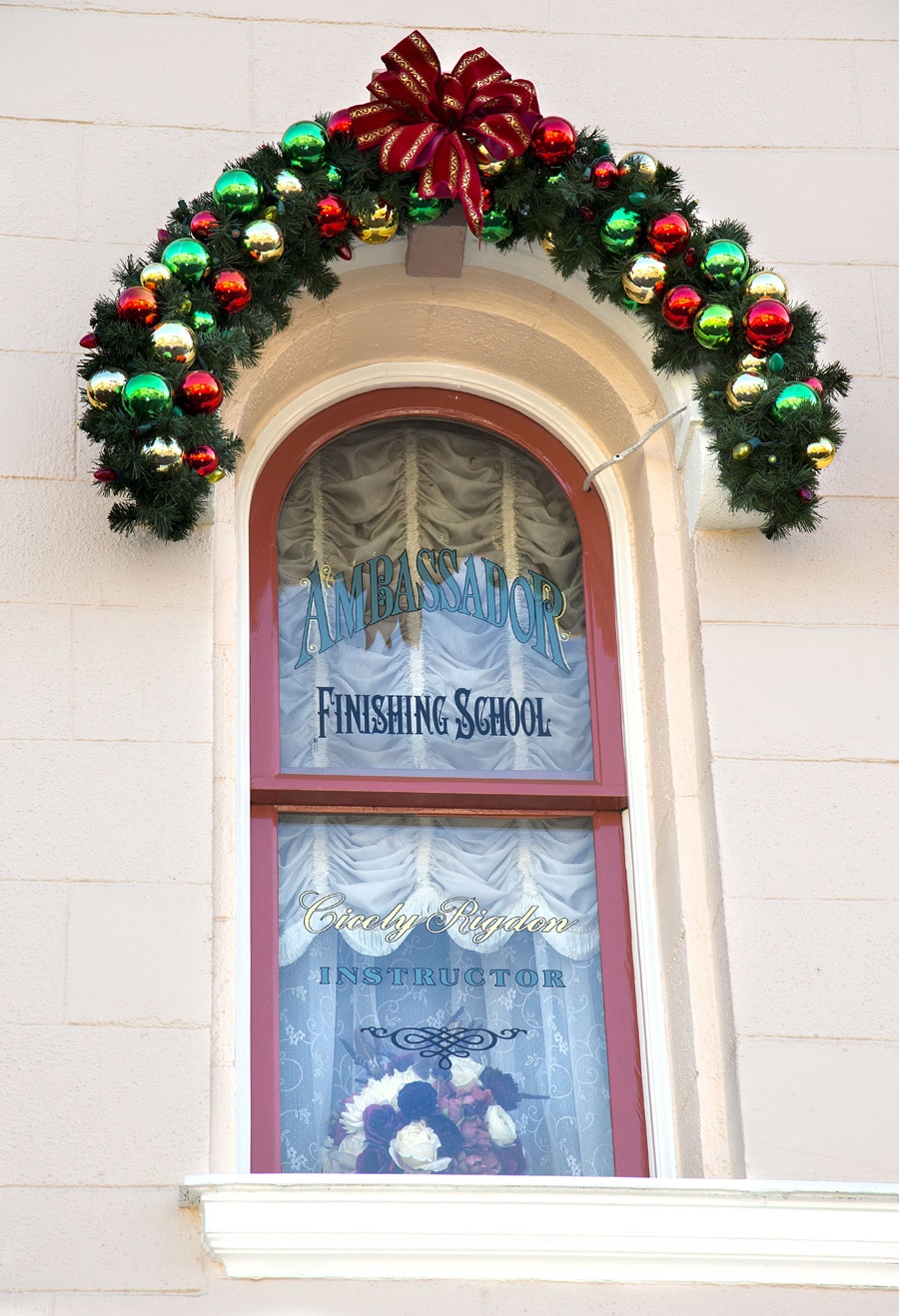
In March 1955, as Walt was preparing for the opening of Disneyland park, he hired Van Arsdale France to undertake the daunting task of training the staff to bring his vision of hospitality to life. As founder of the University of Disneyland training center, today called The Disney University, Van helped promote Walt Disney’s guest service philosophies, teaching cast members to be Ambassadors of Happiness and creating happiness for others.

In his own unique way, Van trained cast members to smile and treat every visitor as a very important guest. Van’s progressive concepts in guest service have been widely recognized and often imitated in the service industry. The Disney University, as well as many of the innovative training programs created by him, is still in existence today. The training handbooks he authored, which feature themes such as “You’re an Ambassador of Happiness” and “You’re Here Because You Care,” have provided a foundation for training new Disney cast members around the globe.

While forever known as the Founder and Professor Emeritus of Disney University, Van went on to perform many roles at Disneyland, including area manager of Tomorrowland, organizational chairman of the Disneyland Recreation Club, and coordinator of the first Disneyland cast member magazine, Backstage Disneyland.

Van retired in 1978 and became a special consultant at Disneyland. He authored “Old Dogs Can Learn New Tricks,” a career guide for senior working adults, as well as his autobiography, “Window On Main Street: 35 Years of Creating Happiness at Disneyland Park.” He was also a speaker about Disneyland history at conventions around the country.

Windows on Main Street, U.S.A., at Disneyland park: Van France

Van was honored with a window on Main Street, U.S.A., on April 26, 1985. Known as a smoker, his window is located above the former Disneyland Tobacco Shop, which today is the 20th Century Music Shop. Van was named a Disney Legend in 1994.

  • Share: 

Tagged: ,

Filed: Disney History, Disneyland Park, Disneyland Resort

Windows on Main Street, U.S.A., at Disneyland Park: Jim Cora

posted on April 16th, 2013 by Jon Storbeck, Vice President, Disneyland Park


Tokyo Disneyland Park opened 30 years ago this week, on April 15, 1983. Jim Cora, who has been a friend and mentor to me, played a key role in the success of our parks in Anaheim, Orlando and Paris, but his most notable achievement with the Walt Disney Company is the work he did on the development of Tokyo Disney Resort.

Jim was hired in 1957 as a part-time attractions host at Disneyland park. He credits Walt Disney for his move from the Matterhorn Bobsleds to the Disneyland Administration Building. “Walt asked me if I had an interest in training,” Jim recalls. “Van France was just starting the Disney University, and he was looking for five guys.” Almost immediately, Jim began advancing within the organization.

In 1971, Jim assisted with the opening of Magic Kingdom Park at Walt Disney World Resort, implementing the Disney Way of Leadership program. In 1974, as staff assistant to Dick Nunis, president of Walt Disney Attractions, he redesigned the Disneyland park operating organization to the “area concept,” becoming one of three production directors for the park, responsible for Fantasyland and Tomorrowland.

In 1979, Jim went international, assuming a role that would later define his career – managing director of operations for the Tokyo Disneyland project. In this capacity, he was responsible for all operational and management training for Tokyo Disneyland. In preparation for the opening of Tokyo Disneyland, Jim was promoted to vice president, Walt Disney Productions Japan, Ltd. He relocated to Japan and was instrumental in providing ongoing support and advice to Oriental Land Company (OLC, owner and operator of Tokyo Disneyland), as well as overseeing Disney’s operational and design standards. In 1983, Jim returned to California and assumed the position of vice president, Disneyland International.

In 1985, Jim was responsible for negotiating the agreements, master planning, and site research for the Disneyland Paris project and was promoted to executive vice president and chief operating officer for Euro Disneyland Corporation in 1987.

Windows on Main Street, U.S.A., at Disneyland Park: Jim Cora Jim Cora Window at Tokyo Disneyland

Jim became president of Disneyland International in 1995 and, four years later, chairman. He retired in 2001 after the successful opening of Tokyo DisneySea. He was named a Disney Legend in 2002 and was honored with a window on Main Street, U.S.A., that same year. The window, located above Disney Clothiers, Ltd., celebrates his extensive international experience; “Global Exports and Expats – Specializing in land and sea operations – Our motto: ‘The Sun Never Sets on Our Magical Kingdoms’ – Jim Cora, Master Operator.” Jim is one of the few individuals to be honored with a window in multiple Disney Parks, including Tokyo Disneyland.

  • Share: 

Tagged: ,

Filed: Disney History, Disneyland Park, Disneyland Resort

Windows on Main Street, U.S.A., at Disneyland Park: Buzz Price Window Dedicated Today

posted on April 9th, 2013 by Jon Storbeck, Vice President, Disneyland Park


Today, Harrison “Buzz” Price, research economist and one of Walt Disney’s most trusted advisors, was honored posthumously with a window on Main Street, U.S.A., in Disneyland park. In a ceremony hosted by Tom Staggs (Chairman, Walt Disney Parks & Resorts) and Michael Colglazier (President, Disneyland Resort), family members, friends and Disney Legends remembered Buzz for the key role he played in Disney history.

“Buzz Price was a true Disney Legend in every sense of the word whose extraordinary contributions left a lasting mark on Walt Disney Company that few can match,” said Tom Staggs. “In addition to helping Walt select the locations for both Disneyland and the Walt Disney World Resort, Buzz played a significant role in virtually every project that has made Disney Parks an iconic institution.”

In 1953, while with the Stanford Research Institute, Buzz helped find the perfect location for Walt’s new concept in outdoor entertainment, Disneyland Resort. Buzz analyzed potential sites in the Southern California area, ultimately focusing on 160 acres of orange groves in Anaheim. “We hit it right on the nose,” Buzz later recalled, “dead center. That was the perfect place for it.” He also determined that Central Florida was best suited for an “East Coast Disneyland” in 1963. In all, Buzz conducted more than 150 project studies for The Walt Disney Company, including site selection and feasibility for Tokyo Disneyland.

Despite the fact that Buzz was never a Disney employee, he and Walt had a relationship built on mutual trust and respect. In 1966, Walt personally appointed Buzz to care for one of his most prized projects, the California Institute of the Arts (CalArts) in Valencia. Walt’s daughter Diane Disney Miller remembered Buzz as integral to the CalArts project: “Before he entered the hospital,” Diane reminisced, “Dad had placed a stack of notebooks in Buzz’s hands, saying, ‘Here, take care of my school for me!’ Dad knew the hands to place his dream in, that Buzz would see it through … and he did.” More than 30 years after its 1971 opening, Buzz remained a dedicated trustee of CalArts. He said at the time, “I have never thought of leaving the school.”

Buzz received a lifetime achievement award from the Themed Entertainment Association in 1994; the award was subsequently re-named “The Buzz Price Thea Award” in his honor. In 2003, Buzz authored his autobiography, Walt’s Revolution! By the Numbers, which tells how Walt and Roy approached strategic planning issues and the impact of their innovation in the attraction field. Buzz was named a Disney Legend in 2003.

  • Share: 

Tagged: , ,

Filed: Disney History, Disneyland Park, Disneyland Resort

Windows on Main Street, U.S.A., at Disneyland Park: Bob Gurr

posted on March 21st, 2013 by Jon Storbeck, Vice President, Disneyland Park


“If it moves on wheels at Disneyland, I probably designed it,” said Bob Gurr, retired Imagineer and Disney Legend. In his Disney career of nearly 40 years, he helped develop more than 100 designs for vehicles ranging from turn-of-the-century Main Street vehicles, sleek bobsleds for the Matterhorn, the cars of Autopia, the futuristic Monorail and more.

Since his youth, Bob was fascinated with tools, mechanical devices and cars. His association with Disney began in 1954, when he was asked to consult on the design of Autopia ride vehicles. Walt Disney was so impressed with Bob’s knowledge and skill that he invited him to join WED Enterprises, today known as Walt Disney Imagineering. Bob went on to design one-of-a-kind vehicles, versions of which are now in use at every Disney theme park resort property around the world. He also helped design the mechanical workings of Disney’s first advanced Audio-Animatronics human figure, Abraham Lincoln, featured in Great Moments with Mr. Lincoln.

Following his retirement in 1981, Bob continued to consult on Disney projects, including the giant Ursula creature featured at Tokyo DisneySea. In 1999, he was honored with the Themed Entertainment Association’s Lifetime Achievement Award. Bob was named a Disney Legend in 2004.

Windows on Main Street, U.S.A., at Disneyland Park: Bob Gurr

Five years ago this month, Bob was honored with a Window on Main Street, U.S.A., above Disney Clothiers, Ltd. The inscription, “Leading the Race to the Future – Meteor Cycle Co. – Our vehicles pass the test of time – Fast, Faultless and Fadless,” is a reference to Bob’s legacy and his love of mountain biking. At the window dedication ceremony, Bob shared that he had enjoyed many memorable days at Disneyland including opening day, the day in 1959 when he gave Vice President Richard Nixon the first trip on the Monorail, and now, this day would be added as “frosting on the cake.”

  • Share: 

Tagged: , ,

Filed: Disney History, Disneyland Park, Disneyland Resort

Windows on Main Street, U.S.A., at Disneyland Park: Ken Anderson

posted on March 4th, 2013 by Jon Storbeck, Vice President, Disneyland Park


Fantasyland is the most magical land of them all – the heart and soul of Disneyland. It is a place of endless enchantment, where it’s always “happily ever after.”

On March 12, Fantasy Faire will make its debut at Disneyland park as a natural extension of Fantasyland. Here, guests will be immersed in a charming European village inspired by their favorite Disney stories as they meet beloved Disney Princesses in a setting befitting royalty. Ken Anderson worked as an animator and art director on many of the Disney films portrayed in Fantasyland. He was also a trained architect, which made him the perfect person to transform film environments into three-dimensional attractions. Anderson’s work on the original Fantasyland in 1955 and his continued efforts on the “New Fantasyland” in 1983 were instrumental in defining the style of Fantasyland that has been the heart of Disneyland since opening day.

Anderson began his Disney career in 1934. Walt Disney referred to him as his “Jack of all trades” because of his masterful skills as an architect, artist, animator, storyteller and designer. Anderson worked on the experimental “Silly Symphonies” before serving as an art director on “Snow White and the Seven Dwarfs.” He had the uncanny ability to wiggle his ears, a characteristic he bestowed upon the endearing dwarf, Dopey. He also worked on “Pinocchio,” “Alice in Wonderland” and contributed technical innovations for mixing live-action with animation in “Song of the South.” He later improved upon this technique while serving as an animation art director for “Pete’s Dragon.”

In the early 1950’s, Walt recruited Anderson to work on a new project – one that was secret at the time. Anderson joined WED Enterprises (now Walt Disney Imagineering) and he became one of the first to work on Disneyland. In 1954, he was the primary designer of Fantasyland. He worked on Peter Pan’s Flight, Snow White’s Adventures and Mr. Toad’s Wild Ride. After Disneyland opened, Anderson remained involved in Fantasyland while working on “Sleeping Beauty” at the Walt Disney Studio. Anderson oversaw the Storybook Land Canal Boats attraction, and in 1957 he worked on the Sleeping Beauty Castle Walkthrough.

Anderson went on to contribute show concepts for the Haunted Mansion and worked on the development of the Walt Disney World Resort and Tokyo Disneyland. He retired in 1978, but continued to work as a consultant for WDI.
“Windows
Anderson’s window on Main Street, U.S.A, is located above the Market House. He was an avid fly fisherman, and in jest the inscription names him proprietor of a bait company. This is ironic because fly fisherman typically do not use bait; they are catch-and-release fishermen. Anderson was named a Disney Legend in 1991.

  • Share: 

Tagged: ,

Filed: Disney History, Disneyland Park, Disneyland Resort

Windows on Main Street, U.S.A., at Disneyland Park: Roger Broggie

posted on February 18th, 2013 by Jon Storbeck, Vice President, Disneyland Park


The Disneyland Railroad was inspired by Walt Disney’s love of trains. Since he first conceived the idea of Disneyland park, every concept design had one thing in common: “… it will be surrounded by a train,” said Walt. Roger Broggie, the first Walt Disney Studio employee to be recruited for the hand-picked team at WED Enterprises (now called Walt Disney Imagineering), was instrumental in helping Walt fulfill this dream.

Disneyland Railroad on Main Street, U.S.A.

Hired in 1939 as a master machinist, one of Broggie’s first assignments was the installation of the multiplane camera at the Burbank studio. Because he was familiar with fabricating small camera parts with great precision, Walt approached him to create a one-eighth scale live steam locomotive. Broggie helped create the Lilly Belle, a miniature live steam engine named for Walt’s wife, Lillian. A replica of the Lilly Belle is currently on display in the Disneyland Main Street Train Station. In 1949, Broggie helped Walt build his miniature trains in the Studio Machine Shop and later installed the Carolwood Pacific Railroad in the backyard of Walt’s Holmby Hills home.

In 1950, Broggie was promoted to head of the Studio Machine Shop and he became the transportation specialist. As plans for Disneyland progressed, he oversaw the development of the Santa Fe and Disneyland Railroad, the Monorail system and Matterhorn Bobsleds. He also worked on new processes and techniques such as Circle-Vision 360, a motion picture format with screens that completely surround the audience, and “Project Little Man” which became the prototype for Audio-Animatronics technology.

While working on “Project Little Man,” Broggie and fellow Imagineer Wathel Rogers constructed a 9-inch-tall figure of a moving, talking man that mimicked vaudevillian tap-dancing using cams, cables and tubes. The original figure is on display at the One Man’s Dream attraction at Disney’s Hollywood Studios, and earlier figures from “Project Little Man” are part of the D23 Presents Treasures of the Walt Disney Archives exhibit at the Ronald Reagan Presidential Library & Museum through April 30, 2013.

Broggie is known for epitomizing the essence of Walt Disney Imagineering – the blending of creative imagination and technical know-how. His legacy lives on at Disney as his grandson Garry (son of Imagineer Roger Broggie, Jr.) carries on the tradition as a third-generation machinist and supervisor at the Disney Studio machine shop.

Broggie was honored with a Window on Main Street, U.S.A., at Disneyland park on March 30, 2007. His window is above the Magic Shop and fittingly refers to him as “Roger Broggie, Shopmaster” and “Advisor to the Magic Makers.” Additionally, he has a window dedicated to him at Magic Kingdom Park in the Walt Disney World Resort, and on October 21, 2003, Walt Disney World Railroad Steam Engine #3, was re-dedicated as the Roger E. Broggie in his honor. In 1990, Broggie was named a Disney Legend.

  • Share: 

Tagged: , ,

Filed: Disney History, Disneyland Park, Disneyland Resort

Windows on Main Street, U.S.A., at Disneyland Park: Wally Boag

posted on February 4th, 2013 by Jon Storbeck, Vice President, Disneyland Park


As we begin the final day for performances of “A Salute to the Golden Horseshoe Review” during “Limited Time Magic” at Disneyland park, I am reminded of the cast who made the original long-running stage show in Frontierland a special piece of Disney history. Specifically, I think about Wallace Vincent “Wally” Boag, who starred as Pecos Bill, the travelling salesman, for nearly 27 years and 40,000 performances.

For Wally, it all began in 1955 when a friend told him about auditions for the “Golden Horseshoe Revue” at Disneyland. He got the role along with a two-week contract. Soon, he was performing at least three shows a day and was one of Walt Disney’s favorite comedic actors. Wally’s talents were also featured on television in “Walt Disney’s Wonderful World of Color,” as well as motion pictures, including “The Absent-Minded Professor,” “Son of Flubber” and “The Love Bug.” He even provided the voice of the Audio-Animatronics parrot, Jose, for the Enchanted Tiki Room.

“In many ways, Wally Boag was the heart of Disneyland in the early days,” Disney Legend Marty Sklar told D23. “It was not only show business, it was the spirit and exuberance Wally brought to every performance, day in and day out. We all knew that Walt loved to watch Wally in the ‘Golden Horseshoe Revue.’ I’m sure I saw Wally’s wild and crazy Pecos Bill act at least 100 times — to this day, 50 years later, I can remember many of his lines, and they are still funny because I can see Wally’s hilarious antics and impeccable timing. No wonder Steve Martin talks about Wally as one of his comedy inspirations.”

Wally Boag’s Window on Main Street, U.S.A.

Wally retired in 1982 and was honored with a Window on Main Street, U.S.A., above Carnation Café. The inscription aptly reads “Theatrical Agency – Golden Vaudeville Routines – Wally Boag, Prop.” In 1995, Wally was named a Disney Legend.

  • Share: 

Tagged: ,

Filed: Disney History, Disneyland Park, Disneyland Resort

Windows on Main Street, U.S.A., at Disneyland Park: Imagineer Marty Sklar

posted on January 17th, 2013 by Jon Storbeck, Vice President, Disneyland Park


As Walt Disney Imagineering celebrates 60 years of storytelling, creativity and innovation, I can’t help but think about the extraordinary contributions of Marty Sklar. He began his Disney career in Public Relations, one month before Disneyland park opened. Marty created the Disneyland News and went on to write most of the marketing materials for Disneyland as well as the annual report and personal correspondences for Walt Disney.

In 1961, Marty moved to WED Enterprises, renamed Walt Disney Imagineering in 1986. For more than 30 years, Marty was the creative leader of Imagineering and was one of the key people responsible for the development of Disney Parks around the world. He guided the design of EPCOT Center, now known simply as Epcot, at Walt Disney World Resort. He also supervised the Imagineering teams in the creative development and design of Tokyo Disneyland, Disney’s Hollywood Studios, Disneyland Paris, Disney’s Animal Kingdom, Disney California Adventure park, Tokyo DisneySea, Walt Disney Studios park in Paris and most recently, Hong Kong Disneyland.

Jim Cora, the former chairman of Disneyland International, called Marty the “keeper of the keys, the conscience, the Jiminy Cricket for the organization.” Marty learned the “Disney way” from Walt himself and mentored many cast members in those traditions.

After 54 years with the company, Marty retired on July 17, 2009, the 54th anniversary of Disneyland park. He received his window on Main Street, U.S.A., that same day. Located at City Hall, Marty’s window is a tribute to his inspirational leadership, design instincts and creative philosophies. Etched on his window is the Latin phrase, “Id Somniate. ld Facite” which means “Dream It. Do It.” and is intended to inspire the dreamers and doers of the future.

Marty has also been honored with windows on Main Street in Disneyland Paris, Hong Kong Disneyland and Magic Kingdom Park at Walt Disney World Resort.

  • Share: 

Tagged: , , ,

Filed: Disney History, Disneyland Park, Disneyland Resort